Widex
WIDEX MRBO 100 Receiver In The Canal (RIC) Hearing Aid
₹48,500MRP
Technology
BluetoothTinnitus MaskingNoise CancellationAI-Powered
Style
RIC
Available Colors
BlackSandy BrownBrownGraphiteRose GoldSilverBeigeDark ChampagneGreyPearl WhiteFine GoldDeep BrownBlack Gloss
Suitable For
Mild Hearing LossModerate Hearing Loss
✅ Free 3-day home trial·🚚 Cash on delivery·🛡️ Genuine warranty
WIDEX MRBO 100 Receiver-in-Canal (RIC) Hearing Aid
The WIDEX MRBO 100 is a compact and discreet Receiver-in-Canal (RIC) hearing aid from the WIDEX MOMENT family. The model designation MRBO, where the final character is the letter “O”, refers to the WIDEX MOMENT RIC 10 platform. It uses a small size 10/PR536 zinc-air disposable battery and is designed for people with suitable mild to moderate hearing loss, depending on the receiver and individual audiological fitting. WIDEX product documentation identifies the MRBO as the RIC 10 model and lists it separately from the RIC 312 D model, which carries the designation MRB2D.
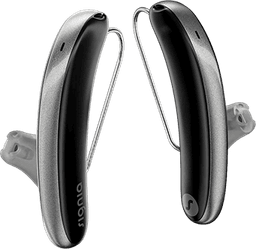
The MRBO 100 combines a small behind-the-ear housing with a receiver positioned near the ear canal. This RIC construction allows the hearing aid to remain discreet while providing appropriately programmed amplification directly through the receiver.
As part of the WIDEX MOMENT platform, the MRBO is designed around WIDEX's emphasis on natural sound. The MOMENT family incorporates PureSound powered by ZeroDelay, a processing approach designed to minimize processing delay and provide a more natural relationship between direct and amplified sound. WIDEX describes the MOMENT sound experience as natural and clear.
The MRBO 100 can be suitable for users who want a small traditional battery-powered hearing aid while still benefiting from modern digital sound processing and convenient wireless control.
WIDEX MOMENT Technology
The WIDEX MRBO 100 belongs to the WIDEX MOMENT hearing-aid platform.
MOMENT was developed to provide a natural sound experience while offering modern hearing-aid processing and connectivity. The platform is available in multiple hearing-aid styles and technology levels.
The MRBO is the RIC 10 configuration of the MOMENT family. WIDEX's technical documentation lists the MRBO RIC 10 with a PR536/size 10 battery. Depending on the technology level, the MOMENT family includes configurations such as 110, 220, 330 and 440.
The 100 designation used in some product listings refers to the particular technology configuration being offered. The physical model remains the MRBO/RIC 10.
Receiver-in-Canal Design
The RIC design is one of the main advantages of the WIDEX MRBO 100.
Unlike a conventional behind-the-ear hearing aid where the receiver is located inside the main housing, a RIC hearing aid places the receiver close to or inside the ear canal.
The main hearing-aid body remains behind the ear and is connected to the receiver through a thin wire.
This arrangement allows the device to remain relatively small and discreet.
WIDEX explains that RIC hearing aids are generally smaller because the receiver is positioned in the ear tip rather than inside the main housing. WIDEX lists its RIC products as suitable for a broad range of hearing losses, depending on the specific model and fitting.
For users who are concerned about the visibility of a hearing aid, the RIC design can offer a more discreet appearance than many conventional BTE designs.
Compact and Discreet Appearance
The MRBO 100 has been designed for users who prefer a hearing aid that is relatively small and unobtrusive.
The hearing-aid housing sits behind the ear, while a thin receiver wire extends toward the ear canal.
Because the receiver is separated from the main housing, the body can remain compact.
This design can be useful for people who want hearing support without a large device being prominently visible.
The discreet appearance can be particularly attractive for working professionals, first-time hearing-aid users and anyone who prefers a low-profile hearing solution.
Size 10 Disposable Battery
The WIDEX MRBO 100 uses a size 10 zinc-air disposable battery, also identified as PR536 or 10A in WIDEX documentation.
This is an important difference between the MRBO and rechargeable WIDEX RIC models.
The user does not need to recharge the hearing aid every night. Instead, the small disposable battery is replaced when its power is exhausted.
WIDEX documentation lists approximately 95 hours for the S-receiver configuration and approximately 90 hours for the M-receiver configuration in one later MOMENT technical table. Actual battery life can vary according to usage, hearing-aid settings, wireless functions and battery quality.
Older WIDEX documentation may show approximately 100 hours under specified test conditions, so actual performance should be understood as an estimate rather than a guaranteed operating time.
The replaceable-battery design can be convenient for users who prefer carrying spare batteries instead of using a charger.
Battery Convenience for Travel
The use of a size 10 disposable battery can provide practical advantages when travelling.
Users can carry spare batteries in a small container and replace the battery whenever necessary.
This means the hearing aid does not depend on access to an electrical outlet for daily operation.
This can be useful during:
Business trips
Holidays
Long-distance travel
Outdoor activities
Overnight stays
Situations where charging facilities are limited
However, size 10 batteries are very small. People with reduced finger dexterity or difficulty handling small objects may prefer a rechargeable hearing aid.
WIDEX PureSound
One of the major features associated with the WIDEX MOMENT family is PureSound.
WIDEX developed PureSound to provide a more natural hearing experience. The technology is associated with the use of very low processing delay through WIDEX ZeroDelay technology.
Conventional digital hearing aids need to process incoming sound before delivering the amplified signal to the ear. This processing can introduce a delay.
WIDEX's ZeroDelay approach is designed to minimize this delay.
This can be particularly relevant when users are sensitive to changes in the sound of their own voice or notice differences between direct environmental sound and amplified sound.
WIDEX describes PureSound as the natural sound experience of the MOMENT platform.
ZeroDelay Technology
ZeroDelay is an important component of the WIDEX MOMENT sound-processing philosophy.
The technology is designed to minimize processing delay so that the relationship between direct sound and amplified sound remains as natural as possible.
This can be particularly relevant when listening to:
Your own voice
Face-to-face speech
Music
Environmental sounds
Sounds produced close to the wearer
The objective is not simply to make sounds louder. Instead, the hearing aid is designed to provide appropriate amplification while minimizing the sensation of delayed processed sound.
Speech Understanding
The primary purpose of the MRBO 100 is to provide appropriately programmed amplification for people with hearing loss.
Hearing loss can make speech difficult to understand, especially when speech is soft, distant or accompanied by background noise.
The MRBO uses digital sound processing to analyze incoming sound and apply amplification according to the user's hearing prescription.
When professionally fitted, this can help make speech more accessible during everyday conversations.
The hearing aid can be used in situations such as:
Family conversations
One-to-one conversations
Small group discussions
Workplace communication
Meetings
Shopping
Social gatherings
Television listening
Outdoor conversations
Hearing aids do not restore hearing to normal. Results vary according to the individual's hearing loss, speech understanding, listening environment, fitting and adaptation.
Sound Processing
The MRBO 100 uses digital processing to manage incoming sound and provide personalized amplification.
Different parts of the frequency range can require different levels of amplification.
For example, a person may have greater difficulty hearing high-frequency speech sounds than lower-frequency sounds.
The audiologist can therefore adjust amplification according to the patient's hearing test.
This allows the hearing aid to provide a more individualized response than a simple volume amplifier.
Personalized Hearing-Aid Fitting
Professional programming is an important part of the MRBO 100 experience.
The audiologist uses the patient's audiogram to establish appropriate amplification levels.
The fitting may then be fine-tuned based on the user's real-world experience.
For example, a user may find speech comfortable at home but difficult to understand in a restaurant. The audiologist can use this feedback to make appropriate adjustments.
A hearing aid should therefore not be judged solely by its technical specifications. The quality of the fitting and the user's individual hearing requirements are equally important.
Intelligent Automation
WIDEX describes the MOMENT RIC 10 as providing intelligent automation alongside PureSound and ZeroDelay.
Intelligent automation is designed to help the hearing aid respond appropriately as the acoustic environment changes.
The user may move from a quiet room to a conversation outdoors, a workplace or a busier environment.
The hearing aid can use its programmed sound-processing strategy to adjust its response.
The goal is to reduce the amount of manual adjustment required from the wearer while maintaining access to important sounds.
Noise Management
Background noise can make hearing conversations more challenging.
The MRBO 100 uses digital sound-processing technology to manage environmental sound according to the programmed fitting.
This can be useful in locations such as:
Restaurants
Busy offices
Shopping centres
Markets
Family gatherings
Public areas
Outdoor environments
The purpose of noise management is not to eliminate all environmental sounds.
Instead, the hearing aid attempts to manage unwanted sounds while maintaining access to speech and other important environmental information.
The effectiveness of noise management varies according to the acoustic environment and the individual's hearing loss.
Directional Microphone Technology
Directional processing can help the hearing aid focus more strongly on sounds arriving from useful directions.
For example, during a face-to-face conversation, the speaker is usually in front of the wearer while competing noise may come from the sides or behind.
The hearing aid can use its microphone and processing system to manage sounds according to the acoustic environment.
Directional processing can therefore support communication in situations where the speech source is distinguishable from competing sounds.
It is important to remember that directional processing does not make complex noisy environments completely quiet. The distance from the speaker, room acoustics and the user's hearing ability remain important factors.
Feedback Management
Feedback is the familiar whistling or squealing sound that may occur when amplified sound leaks from the ear and is picked up again by the hearing-aid microphone.
Modern hearing aids use feedback-management systems to reduce unwanted feedback.
The MRBO 100 is designed to provide appropriate amplification while managing feedback.
However, correct physical fitting is equally important.
Feedback may occur if:
The ear tip does not fit correctly.
The receiver is not appropriate.
Earwax is blocking the ear canal.
The receiver has become loose.
Amplification requires adjustment.
Persistent feedback should be checked by an audiologist.
Receiver Options
The MRBO RIC 10 is available with different receiver configurations.
WIDEX technical documentation identifies S and M receiver configurations for the RIC 10.
The receiver determines how much acoustic output the hearing aid can provide.
A suitable receiver is selected according to the individual's hearing loss.
For a person with milder hearing loss, an S receiver may be appropriate. A person requiring greater amplification may need an M receiver if supported by their hearing profile.
The correct receiver should always be determined from the audiogram and professional fitting requirements.
Hearing-Loss Range
WIDEX's product documentation identifies the RIC 10/MRBO as appropriate for mild and moderate hearing loss.
One technical specification table lists an approximate fitting range of 0–80 dB HL for the S receiver and 0–90 dB HL for the M receiver, depending on the specific fitting configuration.
These figures should not be interpreted as a guarantee that every person within those thresholds will receive the same benefit.
The appropriate hearing aid depends on the complete audiogram, speech recognition, type of hearing loss, ear anatomy and communication needs.
Comfortable RIC Wearing Experience
The MRBO 100 is designed to sit discreetly behind the ear.
The receiver wire is thin and extends toward the ear canal.
This arrangement allows the main housing to remain away from the ear canal while the receiver delivers sound closer to the eardrum.
Different receiver lengths and ear-tip configurations can be used to achieve a suitable fit.
Comfort is individual, so the audiologist should make sure the receiver and ear tip are correctly positioned.
Natural Sound for Everyday Listening
The WIDEX MOMENT platform places strong emphasis on natural sound.
The combination of PureSound and ZeroDelay is designed to minimize processing delay and provide an experience that feels closer to natural acoustic hearing.
This can be important for people who have previously found hearing aids unnatural or overly processed.
The experience will vary between users, and programming remains essential.
Music Listening
The MRBO 100 can also be used for music and general environmental listening.
Music can be particularly demanding for a hearing aid because it contains a wide range of frequencies and changing sound levels.
The WIDEX MOMENT platform is designed to provide natural sound processing that can be useful for both speech and other everyday sounds.
Users who have specific music-listening requirements can discuss these needs with their audiologist so that the hearing-aid fitting can be optimized appropriately.
Wireless Control
The MRBO 100 can be controlled using compatible WIDEX solutions.
WIDEX's current product information states that the MOMENT RIC 10 can be controlled through the TONELINK app or a DEX device.
This provides an alternative to physically adjusting the hearing aid.
The exact connectivity and control functions depend on the particular MOMENT technology level and compatible smartphone or accessory.
Tonelink App
The TONELINK app provides smartphone-based control of compatible WIDEX hearing aids.
For users who prefer not to use physical controls, smartphone control can make basic hearing-aid adjustments more convenient.
Depending on the configuration, users may be able to control functions such as volume and programs.
The app does not replace professional hearing-aid fitting. It provides additional user control after the hearing aid has been appropriately programmed.
DEX Accessories
WIDEX also supports DEX accessories for compatible hearing-aid configurations.
These accessories can provide additional connectivity options depending on the specific model.
They may be useful for users who want additional ways to connect their hearing aids to phones, television or other audio sources.
The exact accessory compatibility should be confirmed for the MRBO technology level before purchase.
Moisture and Durability
The WIDEX MOMENT family incorporates design measures intended to reduce the risk of moisture damage.
WIDEX describes the MOMENT family as having a water-resistant nano coating, durable microphones and engineering intended to improve durability.
The MRBO is a battery-driven hearing aid, so it includes a battery door. Users should therefore take normal precautions against excessive moisture.
The device should not be intentionally submerged or used for swimming.
After exposure to moisture, it should be dried according to the manufacturer's instructions.
Everyday Communication Benefits
The MRBO 100 can support users during many everyday communication situations.
At home, it can make family conversations more accessible.
At work, its discreet RIC design can make it suitable for meetings and professional communication.
During social activities, its digital processing can help provide appropriate amplification for speech and environmental sounds.
The compact design can also make it easier for users to wear their hearing aids for extended periods.
Who Can Consider the WIDEX MRBO 100?
The WIDEX MRBO 100 may be considered by people who:
Have mild or moderate hearing loss within the receiver's fitting capability.
Prefer a discreet RIC hearing aid.
Want a small behind-the-ear design.
Prefer replaceable disposable batteries.
Do not want to depend on daily charging.
Want WIDEX MOMENT sound-processing technology.
Value natural sound.
Want smartphone-based hearing-aid control.
Prefer a low-profile hearing-aid design.
Need hearing support for everyday conversations.
Want a hearing aid suitable for professional and social environments.
Technical Specifications
Feature WIDEX MRBO 100
Brand WIDEX
Product family WIDEX MOMENT
Model designation MRBO
Model type RIC 10
Hearing-aid style Receiver-in-Canal
Battery PR536 / Size 10 zinc-air
Battery type Disposable
Approx. battery life Around 90–100 hours depending on receiver/configuration and test conditions
Receiver options S and M
Approx. fitting range S: up to around 80 dB HL; M: up to around 90 dB HL, depending on configuration
Sound technology WIDEX MOMENT
PureSound Supported
ZeroDelay Supported
Intelligent automation Supported
Smartphone control Supported through compatible WIDEX solutions
App control TONELINK compatibility
Accessories Compatible DEX solutions
Design Compact RIC
Hearing-loss range Mild to moderate, depending on receiver and fitting
WIDEX's published technical documentation confirms the MRBO as the RIC 10 model and specifies the size 10 battery, while technical tables provide different performance and battery-life figures for the S and M receiver configurations.
MRBO 100 vs MRB2D 100
The WIDEX model numbers can be confusing because MRBO and MRB2D look very similar.
The MRBO 100 is the RIC 10 model and uses a size 10/PR536 battery.
The MRB2D 100 is the RIC 312 D model and uses a larger size 312/PR41 battery.
WIDEX's product documentation clearly identifies MRBO as RIC 10 and MRB2D as RIC 312 D.
The MRBO is the smaller battery format and is generally intended for mild-to-moderate hearing loss, while the RIC 312 D offers broader receiver and hearing-loss configurations.
This distinction is important when preparing a product listing or recommending the correct device.
MRBO 100 vs MRR2D 100
The MRBO 100 and MRR2D 100 are also different.
The MRBO is a battery-powered MOMENT RIC 10 hearing aid using a size 10 disposable battery.
The MRR2D is a rechargeable mRIC model using a lithium-ion rechargeable battery.
WIDEX's MAGNIFY documentation identifies the rechargeable mRIC R D as a separate product from the RIC 10 and RIC 312 D models.
Therefore, customers looking specifically for a rechargeable device should not confuse the MRBO with the MRR2D.
Maintenance and Care
Regular maintenance is important for maintaining good hearing-aid performance.
Users should:
Keep the receiver clean.
Check the ear tip regularly.
Remove visible earwax appropriately.
Replace wax guards when required.
Replace the size 10 battery when necessary.
Keep the battery compartment dry.
Avoid unnecessary exposure to water.
Store the hearing aid safely when not being worn.
Arrange professional servicing if sound quality changes.
Earwax can block the receiver and reduce sound output even when the electronic components are functioning normally.
Importance of Audiologist Fitting
The MRBO 100 should be selected according to an individual's hearing test.
An audiologist can assess:
Hearing thresholds
Speech understanding
Type of hearing loss
Degree of hearing loss
Frequency-specific hearing requirements
Ear anatomy
Lifestyle
Communication needs
The audiologist can then select the appropriate receiver and program the hearing aid.
Fine-tuning after the patient has used the device in everyday environments can further improve comfort and usability.
Conclusion
The WIDEX MRBO 100 Receiver-in-Canal Hearing Aid is a compact, discreet and battery-powered hearing solution from the WIDEX MOMENT family. The model designation MRBO refers to the MOMENT RIC 10, not the RIC 312 D. It uses a small PR536/size 10 zinc-air disposable battery and is designed primarily for suitable mild to moderate hearing losses depending on receiver selection and professional fitting.
Its key features include the RIC design, WIDEX MOMENT sound-processing technology, PureSound, ZeroDelay, intelligent automation, digital sound processing, compact behind-the-ear housing, disposable size 10 battery, smartphone control through compatible WIDEX solutions and compatibility with selected DEX accessories. WIDEX describes the MOMENT RIC 10 as a discreet and durable RIC hearing aid with PureSound powered by ZeroDelay.
The MRBO 100 is particularly suitable for users who want a small hearing aid and prefer replaceable batteries instead of a rechargeable system. Its discreet RIC construction can make it appropriate for everyday communication, professional environments and social situations.
The exact performance depends on the user's hearing loss, receiver selection, programming and listening environment. A professional hearing assessment and audiological fitting are therefore recommended before selecting the device.
For users looking for a compact, discreet, natural-sounding, battery-powered RIC hearing aid with WIDEX MOMENT technology, the WIDEX MRBO 100 offers a practical solution for everyday hearing and communication.
More Widex Hearing Aids
Kit ARRDI 440 Widex Receiver In The Canal (RIC) Hearing Aid
Kit ARRDI 330 Widex Receiver In The Canal (RIC) Hearing Aid
Kit ARRDI 220 Widex Receiver In The Canal (RIC) Hearing Aid
Kit ARRDI 110 Widex Receiver In The Canal (RIC) Hearing Aid
ARRDI 440 Widex Receiver In The Canal (RIC) Hearing Aid
ARRDI 330 Widex Receiver In The Canal (RIC) Hearing Aid
Kit ARRDI 440 Widex Receiver In The Canal (RIC) Hearing Aid
Kit ARRDI 330 Widex Receiver In The Canal (RIC) Hearing Aid
Kit ARRDI 220 Widex Receiver In The Canal (RIC) Hearing Aid
Kit ARRDI 110 Widex Receiver In The Canal (RIC) Hearing Aid
ARRDI 440 Widex Receiver In The Canal (RIC) Hearing Aid
ARRDI 330 Widex Receiver In The Canal (RIC) Hearing Aid
Frequently Asked Questions
What is a Widex hearing aid?▼
Widex is a world-leading hearing aid brand known for its advanced technology, exceptional sound quality, and reliability. The WIDEX MRBO 100 Receiver In The Canal (RIC) Hearing Aid is one of their premium models designed to help people with hearing loss experience clear, natural sound.
What technology does the WIDEX MRBO 100 Receiver In The Canal (RIC) Hearing Aid use?▼
The WIDEX MRBO 100 Receiver In The Canal (RIC) Hearing Aid features Bluetooth, Tinnitus Masking, Noise Cancellation, AI-Powered. These technologies work together to deliver outstanding clarity, comfort, and connectivity for the wearer.
Can I connect the WIDEX MRBO 100 Receiver In The Canal (RIC) Hearing Aid to my phone via Bluetooth?▼
Yes, the WIDEX MRBO 100 Receiver In The Canal (RIC) Hearing Aid supports Bluetooth connectivity, allowing you to stream audio directly from your smartphone, TV, or other compatible devices.
What is the style and shape of the WIDEX MRBO 100 Receiver In The Canal (RIC) Hearing Aid?▼
The WIDEX MRBO 100 Receiver In The Canal (RIC) Hearing Aid is available in RIC style(s). RIC (Receiver-in-Canal) designs offer a comfortable fit with excellent sound quality.
What level of hearing loss is the WIDEX MRBO 100 Receiver In The Canal (RIC) Hearing Aid suitable for?▼
The WIDEX MRBO 100 Receiver In The Canal (RIC) Hearing Aid is recommended for individuals with Mild Hearing Loss, Moderate Hearing Loss. We advise getting a professional hearing assessment to confirm the best solution for your specific needs.
What is the price of the WIDEX MRBO 100 Receiver In The Canal (RIC) Hearing Aid?▼
The WIDEX MRBO 100 Receiver In The Canal (RIC) Hearing Aid is priced at ₹48,500. Insono Hearing offers flexible EMI options and financing. Contact us for the latest offers and to schedule a free trial.
Where can I get a free trial of the WIDEX MRBO 100 Receiver In The Canal (RIC) Hearing Aid in India?▼
Insono Hearing offers free trials for the WIDEX MRBO 100 Receiver In The Canal (RIC) Hearing Aid at our clinics. Book an appointment online or call us to experience the device before making a decision.
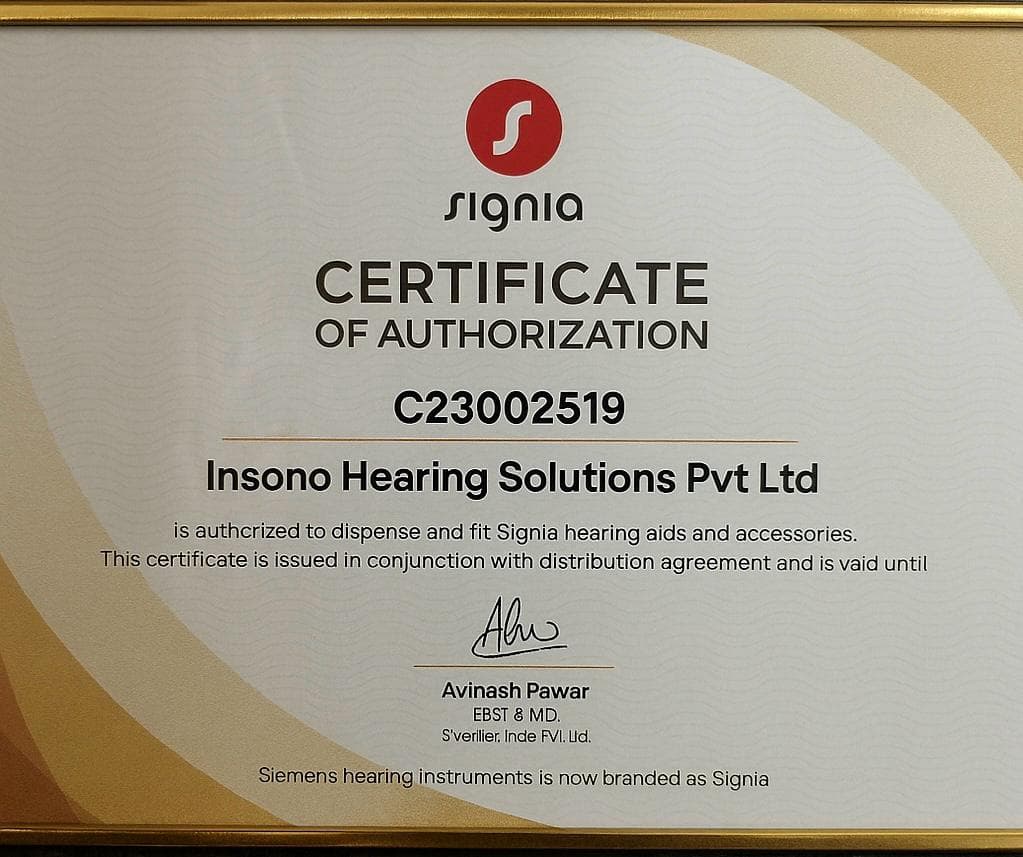
Official Certifications from Widex, Signia & Phonak
Insono Hearing Solutions is an authorized partner for leading global hearing aid brands including Widex, Signia, Phonak, and Oticon. These certifications reflect our trusted expertise and commitment to world-class hearing care in India.


Discover the Different Types of Hearing Aids for Better Hearing
Learn about the latest digital hearing aids, from behind-the-ear (BTE) to completely-in-canal (CIC) devices. Find the right style, features, and comfort level that suit your lifestyle.