Widex
WIDEX MRB2D 50 Receiver In The Canal (RIC) Hearing Aid
₹38,500MRP
Technology
RechargeableBluetoothTinnitus MaskingNoise CancellationAI-Powered
Style
RIC
Available Colors
BlackSandy BrownBrownRose GoldGraphiteGreyBeigeSilverCosmic BlueDark ChampagnePearl WhiteFine GoldDeep BrownBlack Gloss
Suitable For
Mild Hearing LossModerate Hearing LossSevere Hearing Loss
✅ Free 3-day home trial·🚚 Cash on delivery·🛡️ Genuine warranty
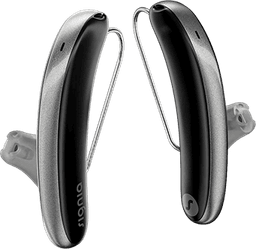
The WIDEX MRB2D 50 is a compact Receiver-in-Canal (RIC) hearing aid from the WIDEX MAGNIFY 50 technology family. It is designed to provide discreet and personalized hearing support for people with mild, moderate and suitable severe hearing loss, depending on the receiver and professional fitting selected for the individual.
The MRB2D is also known as the WIDEX MAGNIFY RIC 312 D. Unlike the rechargeable MRR2D model, the MRB2D uses a replaceable size 312/PR41 zinc-air battery. WIDEX documentation lists the MRB2D as a RIC 312 D with a program button, telecoil, direct streaming capability and compatibility with the MAGNIFY platform.
Its RIC construction places the receiver close to or inside the ear canal while the main hearing-aid body remains discreetly behind the ear. This allows the device to remain relatively small while providing the amplification required for the user's hearing profile.
WIDEX MAGNIFY 50 Technology
The MRB2D 50 belongs to the WIDEX MAGNIFY family and uses the MAGNIFY 50 technology level.
MAGNIFY is a WIDEX hearing-aid platform developed to provide digital sound processing, personalized fitting and wireless connectivity in a range of hearing-aid styles.
The MAGNIFY 50 configuration is designed to provide a balance of sound processing, speech support, environmental management and connectivity features.
WIDEX documentation identifies the MRB2D RIC 312 D as part of the MAGNIFY product family and provides separate 100 and 50 technology configurations.
Receiver-in-Canal Design
The RIC design is one of the most important features of the MRB2D 50.
In a traditional BTE hearing aid, the receiver or speaker is located inside the main hearing-aid housing. In a RIC device, the receiver is separated from the main housing and positioned close to or inside the ear canal.
A thin wire connects the receiver to the hearing-aid body behind the ear.
This construction allows the main housing to remain compact and discreet. WIDEX describes RIC hearing aids as small and discreet devices suitable for mild to severe hearing loss.
The receiver can also be selected according to the individual's hearing loss, making the RIC format flexible for different hearing profiles.
Compact and Discreet Appearance
The MRB2D 50 is designed for users who prefer a hearing aid that is less noticeable than a traditional larger BTE device.
The main unit sits behind the ear, while the thin receiver wire follows the natural contour of the ear.
From the front, the device can be relatively discreet, making it suitable for people who may feel self-conscious about wearing hearing aids.
The compact design is useful for a wide range of users, including professionals, older adults and people who want hearing support without a prominent device.
Size 312 Disposable Battery
One of the defining characteristics of the MRB2D 50 is its size 312 disposable battery.
WIDEX identifies the MRB2D as the RIC 312 D, using PR41/312 batteries.
This means the device does not require a daily charging routine like the rechargeable MRR2D.
Users can carry spare size 312 batteries and replace the battery when necessary.
This can be particularly convenient during travel because the user can carry spare batteries rather than depending entirely on access to a power outlet.
WIDEX technical information for the MRB2D platform gives approximately 165 hours of battery life under specified test conditions for the 312 battery. Actual battery life can vary depending on hearing-aid settings, wireless use, streaming, environmental conditions and battery quality.
Direct Wireless Connectivity
The MRB2D 50 supports wireless connectivity through the WIDEX MAGNIFY platform.
WIDEX documentation lists 2.4 GHz control with Android and iOS and direct audio-streaming capability for compatible configurations.
Wireless connectivity allows the hearing aid to work with compatible smartphones and WIDEX accessories.
Depending on the device and configuration, users can access functions such as hearing-aid control and supported audio streaming.
This can be useful for modern smartphone users who regularly make calls, listen to music or watch videos.
Compatibility depends on the specific smartphone, operating system and hearing-aid configuration, so compatibility should always be checked before purchase.
WIDEX MAGNIFY App
The WIDEX MAGNIFY platform supports smartphone-based control.
WIDEX states that the MAGNIFY app can provide functions such as program changes, volume control and directional focus, along with supported phone calls and streaming functions. The app is compatible with the RIC 312 D family.
This can give users convenient control over their hearing experience without always needing to physically operate the hearing aid.
For example, depending on the configuration, users can adjust volume or change listening programs from their smartphone.
The app complements professional programming and does not replace audiological fitting.
Program Button
The MRB2D 50 features a physical program button.
WIDEX lists the program button as a standard feature of the MRB2D RIC 312 D.
The button can be programmed by the hearing-care professional for supported functions.
Depending on the fitting, it may allow the user to move between different listening programs or perform other programmed controls.
This is useful for people who prefer having direct control over their hearing aid rather than depending completely on a smartphone.
Telecoil
The MRB2D 50 also includes a telecoil.
WIDEX documentation specifically lists a standard telecoil for the MRB2D RIC 312 D.
A telecoil can be particularly useful in venues equipped with hearing-loop systems.
Examples may include:
Auditoriums
Theatres
Meeting halls
Places of worship
Public service counters
Conference rooms
When a compatible hearing loop is available, the telecoil can receive the transmitted audio signal directly through the hearing aid.
This can help provide more direct access to speech or other transmitted audio in suitable environments.
WIDEX TruAcoustics Technology
The MAGNIFY platform incorporates TruAcoustics technology.
WIDEX describes TruAcoustics as part of its MAGNIFY fitting technology, designed to provide a more personalized fitting by accounting for the acoustic characteristics of the individual hearing-aid configuration.
The receiver, ear tip, ear canal and hearing-aid settings all influence the sound ultimately delivered to the ear.
Taking these factors into account can help the audiologist create a more individualized hearing-aid fitting.
This is particularly relevant with RIC hearing aids because different receivers and ear tips can have different acoustic characteristics.
Personal Gain Integrator
WIDEX documentation identifies the Personal Gain Integrator as part of the MAGNIFY platform.
This technology is associated with the hearing-aid fitting process and helps integrate the acoustic characteristics of the hearing aid into the personalized gain calculation.
The objective is to provide a more individualized relationship between the patient's hearing loss and the amplification delivered by the hearing aid.
Professional fitting remains essential because the technology works together with the audiologist's programming and the patient's individual hearing profile.
Processing and Fine-Tuning
The MAGNIFY platform provides multiple processing and fine-tuning channels.
Channels allow different frequency areas to be processed and adjusted separately.
This is important because hearing loss is often different across frequencies. A person may have relatively better low-frequency hearing but greater difficulty hearing high-frequency sounds.
The audiologist can therefore adjust amplification according to the individual's audiogram.
The number of available processing and fine-tuning channels depends on the specific MAGNIFY technology level. WIDEX technical documentation shows that the MAGNIFY family has different channel counts across its technology levels.
This enables more personalized amplification than a simple overall volume control.
Speech Understanding
One of the primary purposes of the MRB2D 50 is to make speech more accessible to people with hearing loss.
Speech contains important information across multiple frequencies. Hearing loss can make certain speech sounds difficult to detect or distinguish.
The hearing aid uses digital processing to provide amplification according to the user's hearing prescription.
When appropriately fitted, this can help users participate more comfortably in everyday conversations.
The MRB2D 50 can be used in situations such as:
Family conversations
One-to-one conversations
Small group discussions
Workplace communication
Meetings
Shopping
Social gatherings
Television listening
Phone conversations
The benefit varies from person to person. Hearing aids do not restore normal hearing, and speech understanding depends on the user's hearing loss, speech recognition ability, environment and fitting.
Noise Management
Background noise can make communication difficult, especially for people with hearing loss.
The MAGNIFY platform includes sound-processing functions intended to manage environmental noise and provide a more comfortable listening experience.
The hearing aid processes incoming sound and applies programmed changes according to the acoustic environment.
This can be useful in:
Restaurants
Busy offices
Markets
Shopping centres
Family gatherings
Public transport
Outdoor environments
Noise management does not remove all background sounds. Instead, the hearing aid attempts to manage the sound environment while maintaining access to important speech and environmental information.
Directional Focus
Directional processing can help the hearing aid focus on sounds coming from useful directions.
For example, during a face-to-face conversation, the person speaking may be directly in front of the wearer while competing noise comes from other directions.
Directional microphone technology can adjust the hearing-aid response according to the acoustic situation.
The MAGNIFY app also provides directional-focus control on compatible configurations.
This can give users additional flexibility when moving between different listening environments.
Feedback Management
Feedback is the whistling or squealing sound that can occur when amplified sound leaks from the ear and is picked up again by the hearing-aid microphone.
Modern digital hearing aids incorporate feedback-management systems to help minimize this problem.
The MRB2D 50 is designed to provide controlled amplification while managing unwanted feedback.
However, physical fitting is also important.
Feedback can occur if:
The ear tip does not fit correctly.
The receiver is not appropriate.
Earwax is blocking the ear canal.
The hearing aid has been positioned incorrectly.
Amplification settings require adjustment.
Persistent feedback should therefore be checked by an audiologist.
Natural Listening Experience
WIDEX has traditionally emphasized natural sound as part of its hearing-aid technology.
The MAGNIFY platform is designed to provide appropriately amplified sound while maintaining listening comfort.
The goal is not simply to make everything louder.
Instead, the hearing aid processes incoming sound and applies amplification according to the wearer's hearing loss.
For new hearing-aid users, environmental sounds may initially seem louder or more noticeable. Gradual adaptation and professional fine-tuning can help users become comfortable with amplified sound.
RIC Receiver Options
The MRB2D platform can be fitted with different receiver configurations depending on the hearing loss.
WIDEX documentation for the RIC 312 D identifies receiver options including S, M, P and HP receivers in the broader platform configuration.
This allows the audiologist to select an appropriate receiver according to the patient's hearing thresholds.
A person with a milder hearing loss may require a different receiver configuration from someone with a greater degree of hearing loss.
Receiver selection should always be based on the audiogram and professional fitting requirements.
Hearing Loss Range
WIDEX lists the RIC 312 D as suitable for mild, moderate and severe hearing loss, depending on configuration.
The exact suitability depends on the receiver, ear anatomy and hearing profile.
Before selecting the MRB2D 50, an audiologist should evaluate:
Pure-tone hearing thresholds
Speech recognition
Type of hearing loss
Degree of hearing loss
Frequency-specific hearing requirements
Ear anatomy
Lifestyle
Communication needs
Previous hearing-aid experience
A model should not be selected based solely on the technology level or product name.
IP68 Dust and Water Protection
The MAGNIFY RIC 312 D platform is documented with IP68 dust and weather protection. WIDEX product literature lists IP68 protection for the RIC 312 D across its receiver configurations.
This provides additional protection against dust and moisture encountered during normal daily use.
However, IP68 should not be interpreted as permission to deliberately submerge the hearing aid or wear it while swimming.
Users should still protect the device from unnecessary water exposure and follow WIDEX care and maintenance instructions.
Comfortable Everyday Use
The RIC design allows the main hearing-aid body to remain behind the ear while the receiver sits near the ear canal.
For many users, this provides a comfortable and lightweight wearing experience.
The appropriate receiver length and ear tip can be selected during the fitting process.
Comfort is highly individual, so the audiologist should ensure that the receiver and ear tip are correctly positioned.
A well-fitted hearing aid should remain secure while avoiding unnecessary pressure or irritation.
Smartphone and Digital Audio
For users who regularly use smartphones, wireless connectivity can be an important advantage.
The MAGNIFY platform supports compatible wireless control and audio connectivity. WIDEX documentation describes 2.4 GHz control with Android and iOS, while the RIC 312 D documentation identifies direct streaming capability.
Depending on the phone and configuration, users can enjoy supported audio such as calls, music and other media through their hearing aids.
This can make the hearing aid useful not only for conversations but also as part of a modern digital lifestyle.
Television and Accessories
The MAGNIFY RIC 312 D is compatible with selected WIDEX accessories.
WIDEX's MAGNIFY product information lists accessories such as TV PLAY, DEX devices and other communication solutions for compatible hearing-aid configurations.
Accessories can extend the functionality of the hearing aid for particular listening situations.
For example, a compatible television accessory can make TV listening more convenient, while DEX accessories can provide additional connectivity or assistive listening functions.
Exact accessory compatibility should be confirmed for the specific hearing-aid configuration.
Battery Convenience for Travel
The size 312 battery system can be useful for people who travel frequently.
Instead of carrying a charger and relying on access to electricity, users can carry spare batteries.
This can be particularly useful during:
Business travel
Holidays
Long-distance journeys
Rural travel
Emergency situations
Users should carry sufficient spare batteries and store them appropriately.
People who have difficulty handling small batteries may prefer a rechargeable alternative such as the WIDEX MRR2D.
Professional Fitting and Fine-Tuning
A hearing aid's performance depends heavily on proper fitting.
The audiologist programs the MRB2D 50 according to the patient's hearing test and communication requirements.
After the initial fitting, the patient may require one or more fine-tuning sessions.
For example, a wearer may report that speech is clear at home but difficult to understand in a restaurant. The audiologist can evaluate the feedback and make suitable adjustments.
This personalized fitting process is an important part of successful hearing-aid use.
Everyday Communication Benefits
The MRB2D 50 can support communication across many everyday situations.
At home, it can help users access conversations with family members.
At work, its discreet RIC design can be useful for meetings and professional communication.
During social gatherings, digital processing and directional features can help manage challenging listening situations.
With compatible smartphones, wireless connectivity can also support phone calls and other audio.
The overall objective is to help the user remain connected with people and sounds in their daily environment.
Who Can Consider the WIDEX MRB2D 50?
The WIDEX MRB2D 50 may be considered by people who:
Have mild, moderate or suitable severe hearing loss.
Prefer a discreet RIC hearing aid.
Want a compact behind-the-ear design.
Prefer replaceable size 312 batteries.
Do not want to depend on daily charging.
Use compatible smartphones.
Want wireless connectivity.
Want direct access to supported audio.
Need telecoil functionality.
Attend venues with hearing-loop systems.
Want WIDEX MAGNIFY sound-processing technology.
Need hearing support for everyday communication.
Technical Specifications
Feature WIDEX MRB2D 50
Brand WIDEX
Product family WIDEX MAGNIFY
Technology level MAGNIFY 50
Model MRB2D
Product type RIC 312 D
Hearing-aid style Receiver-in-Canal
Battery Size 312 / PR41 zinc-air disposable battery
Approx. battery life Up to approximately 165 hours under specified conditions
Wireless control Supported
Direct streaming Supported on compatible configurations
Program button Yes
Telecoil Yes
Smartphone connectivity Compatible iOS/Android control depending on device
App WIDEX MAGNIFY app ecosystem
Sound processing Digital
TruAcoustics Supported
Personal Gain Integrator Supported within MAGNIFY platform
Receiver options S/M/P/HP depending on configuration
Dust/weather protection IP68
Hearing-loss range Mild to severe, depending on receiver and fitting
Design Compact RIC
Charging Not rechargeable; uses replaceable size 312 battery
The core model and feature information is based on WIDEX product documentation for the MAGNIFY RIC 312 D platform.
MRB2D 50 vs MRR2D 50
The names MRB2D and MRR2D are very similar, but the two products have an important difference.
The MRB2D 50 is the RIC 312 D and uses a replaceable size 312 battery.
The MRR2D 50 is the mRIC R D rechargeable model and uses a lithium-ion rechargeable battery. WIDEX's product listing clearly separates the two models.
Therefore, customers looking specifically for rechargeable hearing aids should consider the MRR2D rather than confusing it with the battery-powered MRB2D.
The MRB2D may be preferable for users who value replaceable batteries and the ability to carry spare batteries while travelling.
Maintenance and Care
Regular maintenance is important for maintaining hearing-aid performance.
Users should:
Clean the ear tip regularly.
Check the receiver for earwax accumulation.
Replace wax guards when necessary.
Replace the size 312 battery when required.
Keep the battery compartment clean and dry.
Avoid unnecessary exposure to water.
Store the device properly when not in use.
Schedule professional servicing when sound quality changes.
Earwax can block the receiver and reduce sound output even when the electronic components are working correctly.
Conclusion
The WIDEX MRB2D 50 Receiver-in-Canal Hearing Aid is a compact and discreet hearing solution from the WIDEX MAGNIFY 50 family. Its RIC configuration places the receiver close to the ear canal while keeping the main hearing-aid body behind the ear, providing a discreet alternative to larger conventional hearing-aid designs.
Its key features include MAGNIFY 50 digital technology, a size 312 disposable battery, wireless connectivity, direct streaming on compatible configurations, a physical program button, telecoil functionality, TruAcoustics technology, personalized fitting capabilities and IP68 protection.
The replaceable battery system can be particularly convenient for users who prefer carrying spare batteries rather than charging their hearing aids every day. Its wireless capabilities can also provide useful connectivity with compatible smartphones and WIDEX accessories.
The MRB2D 50 is available with different receiver configurations, allowing the audiologist to select an appropriate setup according to the individual's hearing loss. Professional hearing testing and fitting are therefore essential before selecting the device.
For users looking for a discreet, battery-powered RIC hearing aid with WIDEX MAGNIFY technology, wireless connectivity and telecoil support, the WIDEX MRB2D 50 provides a versatile option for everyday hearing and communication.
More Widex Hearing Aids
Kit ARRDI 440 Widex Receiver In The Canal (RIC) Hearing Aid
Kit ARRDI 330 Widex Receiver In The Canal (RIC) Hearing Aid
Kit ARRDI 220 Widex Receiver In The Canal (RIC) Hearing Aid
Kit ARRDI 110 Widex Receiver In The Canal (RIC) Hearing Aid
ARRDI 440 Widex Receiver In The Canal (RIC) Hearing Aid
ARRDI 330 Widex Receiver In The Canal (RIC) Hearing Aid
Kit ARRDI 440 Widex Receiver In The Canal (RIC) Hearing Aid
Kit ARRDI 330 Widex Receiver In The Canal (RIC) Hearing Aid
Kit ARRDI 220 Widex Receiver In The Canal (RIC) Hearing Aid
Kit ARRDI 110 Widex Receiver In The Canal (RIC) Hearing Aid
ARRDI 440 Widex Receiver In The Canal (RIC) Hearing Aid
ARRDI 330 Widex Receiver In The Canal (RIC) Hearing Aid
Frequently Asked Questions
What is a Widex hearing aid?▼
Widex is a world-leading hearing aid brand known for its advanced technology, exceptional sound quality, and reliability. The WIDEX MRB2D 50 Receiver In The Canal (RIC) Hearing Aid is one of their premium models designed to help people with hearing loss experience clear, natural sound.
What technology does the WIDEX MRB2D 50 Receiver In The Canal (RIC) Hearing Aid use?▼
The WIDEX MRB2D 50 Receiver In The Canal (RIC) Hearing Aid features Rechargeable, Bluetooth, Tinnitus Masking, Noise Cancellation, AI-Powered. These technologies work together to deliver outstanding clarity, comfort, and connectivity for the wearer.
Can I connect the WIDEX MRB2D 50 Receiver In The Canal (RIC) Hearing Aid to my phone via Bluetooth?▼
Yes, the WIDEX MRB2D 50 Receiver In The Canal (RIC) Hearing Aid supports Bluetooth connectivity, allowing you to stream audio directly from your smartphone, TV, or other compatible devices.
What is the style and shape of the WIDEX MRB2D 50 Receiver In The Canal (RIC) Hearing Aid?▼
The WIDEX MRB2D 50 Receiver In The Canal (RIC) Hearing Aid is available in RIC style(s). RIC (Receiver-in-Canal) designs offer a comfortable fit with excellent sound quality.
What level of hearing loss is the WIDEX MRB2D 50 Receiver In The Canal (RIC) Hearing Aid suitable for?▼
The WIDEX MRB2D 50 Receiver In The Canal (RIC) Hearing Aid is recommended for individuals with Mild Hearing Loss, Moderate Hearing Loss, Severe Hearing Loss. We advise getting a professional hearing assessment to confirm the best solution for your specific needs.
What is the price of the WIDEX MRB2D 50 Receiver In The Canal (RIC) Hearing Aid?▼
The WIDEX MRB2D 50 Receiver In The Canal (RIC) Hearing Aid is priced at ₹38,500. Insono Hearing offers flexible EMI options and financing. Contact us for the latest offers and to schedule a free trial.
Where can I get a free trial of the WIDEX MRB2D 50 Receiver In The Canal (RIC) Hearing Aid in India?▼
Insono Hearing offers free trials for the WIDEX MRB2D 50 Receiver In The Canal (RIC) Hearing Aid at our clinics. Book an appointment online or call us to experience the device before making a decision.
Official Certifications from Widex, Signia & Phonak
Insono Hearing Solutions is an authorized partner for leading global hearing aid brands including Widex, Signia, Phonak, and Oticon. These certifications reflect our trusted expertise and commitment to world-class hearing care in India.



Discover the Different Types of Hearing Aids for Better Hearing
Learn about the latest digital hearing aids, from behind-the-ear (BTE) to completely-in-canal (CIC) devices. Find the right style, features, and comfort level that suit your lifestyle.