Widex
WIDEX Kit MRR2D 100 Receiver-in-Canal (RIC) Hearing Aid
₹115,000MRP
Technology
RechargeableBluetoothTinnitus MaskingNoise CancellationAI-Powered
Style
RIC
Available Colors
BlackGreyGraphiteSilverDark ChampagneBeigeSandy BrownBrownPearl WhiteDeep BrownBlack Gloss
Suitable For
Mild Hearing LossModerate Hearing Loss
✅ Free 3-day home trial·🚚 Cash on delivery·🛡️ Genuine warranty
The WIDEX MRR2D 100 Receiver-in-Canal (RIC) Hearing Aid is a modern rechargeable hearing solution from the Widex MAGNIFY family, designed for people who want discreet hearing support, personalized amplification, convenient wireless connectivity, and the simplicity of rechargeable power.
The MRR2D 100 is also identified as the mRIC R D MAGNIFY 100 [M10]. It is designed for users with mild, moderate, and some severe hearing losses, depending on the selected receiver and professional fitting. Widex lists the model with a lithium-ion rechargeable battery, Bluetooth connectivity, direct streaming for compatible devices, a program button, and IP68 dust and water resistance.
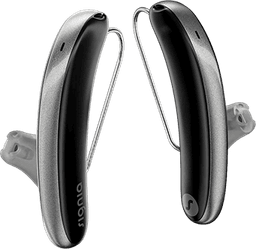
Unlike a traditional BTE hearing aid, the RIC design places the receiver close to or inside the ear canal while the main hearing-aid housing sits discreetly behind the ear. This separation allows the device to remain relatively compact while providing the flexibility of different receiver configurations.
The MRR2D 100 is designed for people who want a combination of everyday hearing support, discreet styling, rechargeable convenience, and modern connectivity.
Receiver-in-Canal Design
The Receiver-in-Canal (RIC) design is one of the defining characteristics of the WIDEX MRR2D 100.
In a RIC hearing aid, the main electronics and microphones are positioned in a small housing behind the ear, while the receiver is positioned closer to the ear canal.
This configuration provides several practical advantages.
The behind-the-ear housing can remain relatively small and discreet, while the receiver can be selected according to the user's hearing requirements.
Widex lists the MRR2D as suitable for mild, moderate, and severe hearing loss, with the exact fitting range depending on the receiver and configuration.
The result is a hearing-aid style that combines a compact behind-the-ear housing with an in-ear receiver.
Widex MAGNIFY 100 Technology
The MRR2D 100 belongs to the Widex MAGNIFY 100 technology level.
MAGNIFY is designed to provide personalized digital hearing support for everyday listening environments.
The hearing aid processes incoming sounds and applies amplification according to the wearer's individual hearing profile.
This is important because hearing loss varies from person to person. Two people may have similar overall hearing loss but require different amplification across different frequencies.
The hearing-care professional therefore programs the MRR2D 100 according to the user's hearing test and listening requirements.
Personalized Digital Sound Processing
The WIDEX MRR2D 100 uses digital processing to analyze incoming acoustic information and provide appropriate amplification.
During a professional fitting, the audiologist considers the user's audiogram, hearing needs, lifestyle, and preferred listening environments.
The device can then be fine-tuned to support everyday communication.
Personalized programming can help address different listening requirements, including:
Understanding speech
Hearing conversations at home
Communicating at work
Participating in social activities
Listening in quieter environments
Managing more demanding acoustic situations
The purpose is not simply to make every sound louder. Instead, the hearing aid is programmed to provide appropriate amplification based on the individual's hearing loss.
Speech Understanding Support
Speech understanding is one of the most important goals for many hearing-aid users.
The WIDEX MRR2D 100 is designed to provide personalized amplification that can support access to speech in everyday situations.
This can be useful when talking with family members, friends, colleagues, customers, or other people.
Speech can be particularly challenging when background noise is present. Digital processing can help the hearing aid respond to changing acoustic conditions, although no hearing aid can completely eliminate background noise or guarantee perfect speech understanding.
The quality of the final result depends on factors such as hearing loss, fitting accuracy, listening environment, distance from the speaker, and individual adaptation.
Environmental Sound Management
The world around us contains many different types of sound.
At home, users may hear conversations, kitchen appliances, doors, televisions, fans, and other household sounds.
At work, there may be conversations, phones, computers, air-conditioning systems, and movement around the office.
Outside, there may be traffic, people talking, wind, and other environmental sounds.
The MRR2D 100 is designed to provide hearing support while adapting to the user's everyday listening requirements.
A professional fitting can help balance amplification so that important sounds remain accessible without making the overall listening experience unnecessarily uncomfortable.
Background Noise Management
Background noise can make communication more difficult, particularly for people with hearing loss.
Examples include:
Restaurants
Cafés
Busy offices
Shopping centres
Public transportation
Family gatherings
Group conversations
Outdoor environments
The MRR2D 100 uses digital hearing-aid processing to manage incoming sounds and provide appropriate amplification.
The goal is to make listening more manageable rather than attempting to remove every sound around the user.
In complex acoustic environments, positioning, lighting, visual cues, distance from the speaker, and communication strategies can also influence speech understanding.
Rechargeable Lithium-Ion Battery
One of the most practical features of the MRR2D 100 is its rechargeable lithium-ion power system.
Widex lists the MRR2D as using a Li-ion rechargeable battery. The manufacturer's Japanese product information states approximately 20 hours of continuous use under its stated test conditions, based on a four-hour full charge and without streaming.
Rechargeability eliminates the need for regular disposable battery replacement.
For many users, this can make daily hearing-aid handling simpler.
Instead of carrying replacement batteries, the user can place the hearing aids into their compatible charger as part of their daily routine.
Actual battery performance can vary depending on usage, streaming, environmental conditions, battery age, and other factors.
Convenient Charging
The MRR2D 100 is designed to work with a dedicated charging solution.
Widex lists charging options for the MRR2D, including a standard charger and a charger that incorporates drying and cleaning-related functions in certain market configurations.
The hearing aids can be placed into the charger when they are not being worn.
A regular charging routine can help ensure that the hearing aids are ready for use throughout the day.
Users should always use the compatible charger recommended for their particular hearing-aid configuration.
Bluetooth Connectivity
The WIDEX MRR2D 100 supports Bluetooth connectivity.
This allows compatible devices to communicate wirelessly with the hearing aids.
Widex specifies direct streaming from iPhone and ASHA-compatible Android devices for the MRR2D.
Compatibility can vary depending on the smartphone model, operating system, region, and software version.
For this reason, users should verify their particular smartphone before purchasing if direct streaming is an important requirement.
Direct Audio Streaming
Direct streaming is one of the useful features of the MRR2D 100.
With a compatible smartphone, users can stream supported audio directly to the hearing aids.
Depending on the compatible device and application, this can include activities such as:
Phone calls
Music
Videos
Podcasts
Other supported audio
This can make the hearing aids part of the user's everyday digital communication system rather than functioning only as traditional amplification devices.
The exact streaming experience depends on the connected smartphone and compatibility.
Program Button
The MRR2D 100 includes a program button according to Widex product information.
The button can provide access to programmed hearing settings, depending on how the hearing aid is configured by the hearing-care professional.
This can be useful when the user wants to change listening settings without using a smartphone.
The exact function of the button can be customized or configured according to the device's available settings.
Discreet Behind-the-Ear Appearance
The RIC design allows the MRR2D 100 to maintain a relatively compact behind-the-ear profile.
The thin receiver wire extends toward the ear, while the main hearing-aid housing sits behind the ear.
Compared with some larger BTE hearing aids, this design can be visually discreet.
The visibility of the hearing aid depends on the user's hairstyle, ear anatomy, selected receiver, colour, and fitting configuration.
Different Receiver Options
Receiver selection is an important part of RIC fitting.
Widex documentation indicates that the MRR2D model supports different receiver configurations, allowing the hearing-care professional to select an appropriate receiver according to hearing requirements. Widex's MAGNIFY documentation also identifies the model for mild, moderate, and severe hearing loss depending on configuration.
This flexibility is useful because the required amplification is different for every user.
The audiologist determines the appropriate receiver and coupling based on the audiogram and physical requirements.
Comfortable Open-Ear Concept
A RIC hearing aid can provide an open or more open acoustic coupling in appropriate fittings.
This can help some users maintain awareness of their own voice and surrounding environmental sounds.
However, the appropriate coupling depends on the hearing loss and receiver configuration.
For users with greater amplification requirements, a different coupling or receiver may be necessary.
Professional fitting is therefore essential.
Feedback Management
Acoustic feedback is the whistling sound that can sometimes occur when amplified sound is picked up again by the hearing-aid microphone.
Digital feedback-management systems are designed to help reduce unwanted feedback.
Correct receiver selection and physical fitting are also important.
If a user experiences repeated whistling, the hearing aid should be examined and adjusted by an audiologist rather than relying only on manual volume changes.
Wind and Environmental Sound Considerations
Outdoor environments can create wind noise around hearing-aid microphones.
Digital hearing-aid processing can help manage unwanted environmental noise, including conditions where wind affects microphone input.
The effectiveness of wind-noise management depends on environmental conditions and the specific fitting.
The MRR2D 100 is intended for everyday use, but users should still protect the device from unnecessary exposure to water, excessive moisture, and physical damage.
IP68 Dust and Water Resistance
Widex lists the MRR2D 100 with IP68 dust and water resistance, described by Widex as the highest level of dust and water protection in its product information.
This provides an additional level of protection for everyday situations.
However, water resistance does not mean that the hearing aid should intentionally be submerged or exposed to activities such as swimming or showering unless the manufacturer specifically states that the particular configuration is suitable for that use.
Users should follow the manufacturer's care and moisture-management instructions.
Everyday Use at Home
The MRR2D 100 can be used during everyday activities at home.
It can support conversations with family members, listening to television, household communication, and awareness of surrounding sounds.
For people who frequently ask family members to repeat themselves, appropriate amplification may help make everyday conversations more accessible.
Office and Professional Communication
The discreet RIC design can be particularly practical for working professionals.
The MRR2D 100 can support communication during:
One-to-one meetings
Team discussions
Customer conversations
Office interactions
Telephone conversations
Workplace presentations
Direct streaming from a compatible smartphone can also be useful for professional calls when the connected device supports the required technology.
Social Gatherings
Restaurants, family functions, and social gatherings can involve several people speaking at once.
These environments can be challenging for anyone with hearing loss.
The MRR2D 100's digital processing is designed to provide hearing support while managing the surrounding acoustic environment.
Users may still benefit from sitting closer to the person speaking, reducing distance, choosing quieter seating locations, and maintaining visual contact.
Travel and Outdoor Activities
The compact RIC design can be convenient for users who travel frequently.
The rechargeable battery removes the need to carry disposable batteries, while the IP68 rating provides added protection against everyday dust and moisture exposure.
For travel, users should carry the appropriate charger and follow recommended storage and charging practices.
Smartphone-Based Connectivity
Modern hearing aids can provide more than traditional amplification.
With a compatible smartphone, the MRR2D 100 can become part of the user's digital lifestyle.
Depending on compatibility, users can benefit from direct audio streaming and wireless communication between the phone and hearing aids.
This can make phone conversations and other audio content more convenient.
Professional Hearing Test and Fitting
A professional hearing evaluation should be performed before selecting the MRR2D 100.
The audiologist evaluates:
Hearing thresholds
Speech understanding
Hearing-loss pattern
Lifestyle
Communication requirements
Listening environments
Receiver requirements
Physical ear characteristics
The device is then programmed according to the hearing assessment.
Correct fitting is particularly important for RIC hearing aids because receiver selection and coupling can significantly affect the listening experience.
Fine-Tuning and Follow-Up
Initial fitting is only one part of the hearing-aid process.
After wearing the device in real-world environments, users may notice certain sounds that require adjustment.
For example, the user may feel that:
Their own voice sounds different
Certain environmental sounds are too noticeable
Speech needs additional clarity
The device needs a different program
The receiver feels uncomfortable
An audiologist can make appropriate adjustments based on this feedback.
Fine-tuning can help make the hearing aid more comfortable and suitable for the user's daily routine.
Maintenance and Care
Regular care is important for long-term hearing-aid performance.
Users should:
Clean the hearing aid according to manufacturer instructions.
Keep the receiver and ear coupling clean.
Check the microphone openings regularly.
Keep the charging contacts clean.
Store the device correctly when not in use.
Charge the hearing aids using the compatible charger.
Avoid unnecessary exposure to excessive moisture.
Do not use the hearing aid while showering or swimming unless specifically approved for that configuration.
Arrange professional cleaning when necessary.
Regular professional servicing can also help identify receiver, microphone, battery, or connectivity issues.
Key Features of WIDEX MRR2D 100
The main features include:
Receiver-in-Canal design
Widex MAGNIFY 100 technology level
MRR2D model designation
Rechargeable lithium-ion battery
Approximately 20-hour continuous-use battery life under Widex's stated non-streaming test conditions
Bluetooth connectivity
Direct audio streaming with compatible iPhone and ASHA-compatible Android devices
Program button
Mild, moderate, and severe hearing-loss fitting capability depending on receiver/configuration
Different receiver options
Personalized digital amplification
Environmental sound processing
Speech-supportive amplification
Background-noise management
Feedback management
Wind-noise management
IP68 dust and water resistance
Compact RIC design
Professional programming and fine-tuning
Compatible charging solutions
Two-year warranty listed by Widex for the referenced market configuration
WIDEX MRR2D 100: Technical Overview
Feature WIDEX MRR2D 100
Product family Widex MAGNIFY
Technology level MAGNIFY 100
Model mRIC R D / MRR2D
Hearing-aid style Receiver-in-Canal
Power Rechargeable lithium-ion
Battery performance Approximately 20 hours under Widex's stated non-streaming conditions
Connectivity Bluetooth
Direct streaming Compatible iPhone and ASHA-compatible Android devices
Control Program button
Hearing-loss range Mild, moderate, severe, depending on configuration
Protection IP68
Fitting Professional audiological fitting
Charging Dedicated compatible charger
The exact receiver, coupling, streaming compatibility, and configuration should be confirmed before purchase because these can affect the final fitting and available functionality.
Who Can Consider the WIDEX MRR2D 100?
The MRR2D 100 may be considered by people who:
Want a discreet RIC hearing aid
Prefer rechargeable hearing technology
Want Bluetooth connectivity
Use a compatible smartphone
Want direct audio streaming
Prefer not to replace disposable batteries regularly
Need personalized digital amplification
Want a compact behind-the-ear design
Have mild to severe hearing loss depending on receiver and fitting requirements
Want a hearing aid suitable for everyday communication
The final suitability should always be determined through a hearing assessment and professional fitting.
Why Choose a Rechargeable RIC Hearing Aid?
Rechargeability can simplify daily hearing-aid use.
Instead of handling disposable batteries, users can establish a routine of placing their hearing aids into the charger at the appropriate time.
The RIC form factor also provides a useful combination of compact design and receiver flexibility.
For users who regularly use smartphones, Bluetooth connectivity and direct streaming can provide additional convenience.
Final Summary
The WIDEX MRR2D 100 Receiver-in-Canal Hearing Aid is a rechargeable digital hearing solution from the Widex MAGNIFY 100 family.
Its RIC design combines a compact behind-the-ear housing with a receiver positioned near the ear canal. The model uses a rechargeable lithium-ion battery, supports Bluetooth and direct streaming with compatible devices, includes a program button, and is rated IP68 for dust and water resistance according to Widex's product information.
The approximately 20-hour battery performance stated by Widex under non-streaming conditions can make the device convenient for daily use, while smartphone streaming can integrate hearing support into everyday calls and audio activities.
Most importantly, the MRR2D 100 should be professionally selected, fitted, and programmed according to the user's hearing test and lifestyle. Receiver selection and fitting are especially important because the appropriate configuration depends on the individual's hearing loss.
For users looking for a discreet, rechargeable RIC hearing aid with Bluetooth connectivity and modern everyday features, the WIDEX MRR2D 100 provides a practical hearing-support option within the Widex MAGNIFY range.
More Widex Hearing Aids
Kit ARRDI 440 Widex Receiver In The Canal (RIC) Hearing Aid
Kit ARRDI 330 Widex Receiver In The Canal (RIC) Hearing Aid
Kit ARRDI 220 Widex Receiver In The Canal (RIC) Hearing Aid
Kit ARRDI 110 Widex Receiver In The Canal (RIC) Hearing Aid
ARRDI 440 Widex Receiver In The Canal (RIC) Hearing Aid
ARRDI 330 Widex Receiver In The Canal (RIC) Hearing Aid
Kit ARRDI 440 Widex Receiver In The Canal (RIC) Hearing Aid
Kit ARRDI 330 Widex Receiver In The Canal (RIC) Hearing Aid
Kit ARRDI 220 Widex Receiver In The Canal (RIC) Hearing Aid
Kit ARRDI 110 Widex Receiver In The Canal (RIC) Hearing Aid
ARRDI 440 Widex Receiver In The Canal (RIC) Hearing Aid
ARRDI 330 Widex Receiver In The Canal (RIC) Hearing Aid
Frequently Asked Questions
What is a Widex hearing aid?▼
Widex is a world-leading hearing aid brand known for its advanced technology, exceptional sound quality, and reliability. The WIDEX Kit MRR2D 100 Receiver-in-Canal (RIC) Hearing Aid is one of their premium models designed to help people with hearing loss experience clear, natural sound.
What technology does the WIDEX Kit MRR2D 100 Receiver-in-Canal (RIC) Hearing Aid use?▼
The WIDEX Kit MRR2D 100 Receiver-in-Canal (RIC) Hearing Aid features Rechargeable, Bluetooth, Tinnitus Masking, Noise Cancellation, AI-Powered. These technologies work together to deliver outstanding clarity, comfort, and connectivity for the wearer.
Can I connect the WIDEX Kit MRR2D 100 Receiver-in-Canal (RIC) Hearing Aid to my phone via Bluetooth?▼
Yes, the WIDEX Kit MRR2D 100 Receiver-in-Canal (RIC) Hearing Aid supports Bluetooth connectivity, allowing you to stream audio directly from your smartphone, TV, or other compatible devices.
What is the style and shape of the WIDEX Kit MRR2D 100 Receiver-in-Canal (RIC) Hearing Aid?▼
The WIDEX Kit MRR2D 100 Receiver-in-Canal (RIC) Hearing Aid is available in RIC style(s). RIC (Receiver-in-Canal) designs offer a comfortable fit with excellent sound quality.
What level of hearing loss is the WIDEX Kit MRR2D 100 Receiver-in-Canal (RIC) Hearing Aid suitable for?▼
The WIDEX Kit MRR2D 100 Receiver-in-Canal (RIC) Hearing Aid is recommended for individuals with Mild Hearing Loss, Moderate Hearing Loss. We advise getting a professional hearing assessment to confirm the best solution for your specific needs.
What is the price of the WIDEX Kit MRR2D 100 Receiver-in-Canal (RIC) Hearing Aid?▼
The WIDEX Kit MRR2D 100 Receiver-in-Canal (RIC) Hearing Aid is priced at ₹115,000. Insono Hearing offers flexible EMI options and financing. Contact us for the latest offers and to schedule a free trial.
Where can I get a free trial of the WIDEX Kit MRR2D 100 Receiver-in-Canal (RIC) Hearing Aid in India?▼
Insono Hearing offers free trials for the WIDEX Kit MRR2D 100 Receiver-in-Canal (RIC) Hearing Aid at our clinics. Book an appointment online or call us to experience the device before making a decision.
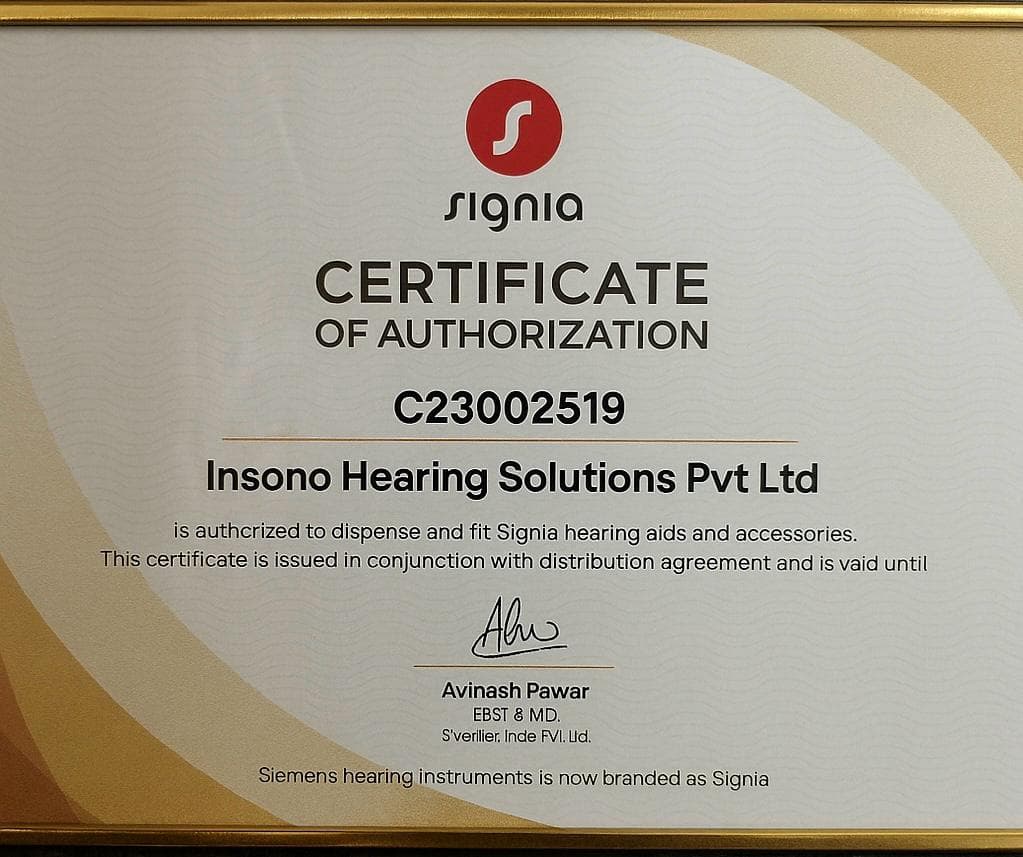
Official Certifications from Widex, Signia & Phonak
Insono Hearing Solutions is an authorized partner for leading global hearing aid brands including Widex, Signia, Phonak, and Oticon. These certifications reflect our trusted expertise and commitment to world-class hearing care in India.


Discover the Different Types of Hearing Aids for Better Hearing
Learn about the latest digital hearing aids, from behind-the-ear (BTE) to completely-in-canal (CIC) devices. Find the right style, features, and comfort level that suit your lifestyle.